Learn and research math, science, chemistry, biology, physics, astronomy, electronics, and much more. 101science.com is the internet science PORTAL to more than 20,000 science sites. This site is FREE!
|
| Amateur
Radio |
Amazon.com |Biology | Books
| Chemistry | Data
Sheets | Electronics |
Math | Microscope | NASA-TV
| |

|
Would you like to know everything about mathematics?
Do you think that is impossible? It isn't if you are willing to read and study many books. You can't learn everything from class lectures. The bulk of your mathematics learning will come from reading, working problems, and studying various books on your own. And you can do this at your convenience. Since there is no pressure, you can learn without stress. You can learn mathematics by studying the information on this web page and in the many wonderful books and multimedia materials.
-
Elementary Arithmetic
- High School
Math
- College Algebra
- Trigonometry
- Geometry
- Calculus
But... let's start at the beginning and work our way up through the various areas of math. We need a good foundation of each area to build upon for the next level.
ELEMENTARY MATH
The WWW links on this site will take you directly to the various web site pages. Your browser URL address line will tell you the origin of the site.
MATH FOR ELEMENTARY SCHOOL KIDS http://www.teachrkids.com/
Elementary
School Math - 101science.com - WWW Links page.
All About Fractions
Reduce
Fractions - Java http://www.mathepower.com/english/bruchkur.php
Reduce
Fractions with Excel http://www.mrexcel.com/tip039.shtml
All About Percent and Ratios
Equations - how to solve
Factors - essential basics
Graphs - basic essentials
Measurement - from mm to mł
Mathmastery www.mathmastery.comwww.mathmastery.com
Teach Kinds Math http://www.teachrkids.com/
COUNTING TABLE
|
1 |
2 |
3 |
4 |
5 |
6 |
7 |
8 |
9 |
10 |
|
11 |
12 |
13 |
14 |
15 |
16 |
17 |
18 |
19 |
20 |
|
21 |
22 |
23 |
24 |
25 |
26 |
27 |
28 |
29 |
30 |
|
31 |
32 |
33 |
34 |
35 |
36 |
37 |
38 |
39 |
40 |
|
41 |
42 |
43 |
44 |
45 |
46 |
47 |
48 |
49 |
50 |
|
51 |
52 |
53 |
54 |
55 |
56 |
57 |
58 |
59 |
60 |
|
61 |
62 |
63 |
64 |
65 |
66 |
67 |
68 |
69 |
70 |
|
71 |
72 |
73 |
74 |
75 |
76 |
77 |
78 |
79 |
80 |
|
81 |
82 |
83 |
84 |
85 |
86 |
87 |
88 |
89 |
90 |
|
91 |
92 |
93 |
94 |
95 |
96 |
97 |
98 |
99 |
100 |
|
1 |
2 |
3 |
4 |
5 |
6 |
7 |
8 |
9 |
10 |
|
2 |
4 |
6 |
8 |
10 |
12 |
14 |
16 |
18 |
20 |
|
3 |
6 |
9 |
12 |
15 |
18 |
21 |
24 |
27 |
30 |
|
4 |
8 |
12 |
16 |
20 |
24 |
28 |
32 |
36 |
40 |
|
5 |
10 |
15 |
20 |
25 |
30 |
35 |
40 |
45 |
50 |
|
6 |
12 |
18 |
24 |
30 |
36 |
42 |
48 |
54 |
60 |
|
7 |
14 |
21 |
28 |
35 |
42 |
49 |
56 |
63 |
70 |
|
8 |
16 |
24 |
32 |
40 |
48 |
56 |
64 |
72 |
80 |
|
9 |
18 |
27 |
36 |
45 |
54 |
63 |
72 |
81 |
90 |
|
10 |
20 |
30 |
40 |
50 |
60 |
70 |
80 |
90 |
100 |
Algebra
- 101science.com - WWW Links page.
Geometry
- 101science.com - WWW Links page.
Trigonometry
- 101science.com - WWW Links page.
WHAT
IS TRIGONOMETRY? http://fergusmurray.members.beeb.net/trig.htm
Calculus
- 101science.com - WWW Links page.
Laboratory
Manual for Calculus (With Mathcad sheets.)
Probability
and Statistics - 101science.com - WWW Links page.
Mathematical
Ideas in Science - MATH - 7 Stones
Explore
Math http://www.exploremath.com/
Plus
Math http://plus.maths.org/
Algebra
- basic essentials
Equations - how to
solve
Factors - essential
basics
Graphs - basic essentials
Measurement - from mm
to mł
Percentage - helping you
achieve 100%
Prime numbers - talk
about odd!
Standard Form - scientifically
speaking
Basic
Math
ˇ Everyday
Math
ˇ Pre-Algebra
ˇ Algebra
ˇ Geometry
ˇ Trigonometry
ˇ Statistics
ˇ Calculus
ˇ Advanced
Topics
ˇ Others
Geometry Center: Triangle Tilings and Polyhedra
Geometry Formulas Geometry Formulas
Math Software Downloads: http://www.numericalmathematics.com/numerical_solutions.htm
Math Software - Top 100 Programs - http://softbase.150m.com/top40.html
Mathematics:
A Human Endeavor:
A book for Those Who Think They Don't Like The Subject.
College and advanced Math http://pirate.shu.edu/~wachsmut/index.html
Advanced Mathematics for
Applications Mathematica Notebooks
The
Certificate of Advanced Study in Mathematics
Advanced
Mathematics
ADVANCED
MATHEMATICS FOR ENGINEERING AND SCIENCE
LHS
Math Dept. - Kevin Kelly - Honors Advanced Mathematics
ENGnetBASE:
Engineering Handbooks Online
Calculus@Internet
Advanced
Mathematics
Advanced
Mathematics in Mathematica
www.uen.org/cgi-bin/websql/lessons/c3.hts?core=2&course_num=5400
WITS
- Advanced Mathematics of Finance
Effective
Multicultural Curriculum Transformation in "Advanced"
Mathematical
Proofs: A Transition to Advanced Mathematics
Domestic
Technology Transfer Program (DTTP) - Advanced Mathematics
Graded
Exercises in Advanced Mathematics - Secondary Education ...
Guide to Advanced Mathematical Principles http://www.superstringtheory.com/math/math3.html
LINEAR ALGEBRA - From MIT
MIT Linear Algebra home page: http://ocw.mit.edu/OcwWeb/Mathematics/18-06Spring-2005/CourseHome/index.htm
MATHEMATICS TUTORIALS
ALGEBRA GEOMETRY TRIGONOMETRY CALCULUS STATISTICS
VERY IMPORTANT! Various
algebraic equation forms for a straight line.
VERY IMPORTANT! What
is a FUNCTION? DOMAIN? RANGE?
Exponential and Logarithmic Functions
Derivatives
of Logarithmic and Exponential Functions
Applications
(solving word Problems) of Exponential and Logarithmic Functions
Algebra
II: Exponential and Logarithmic Functions - Math for Morons Like Us
What's
the difference between Log and Ln?
Comprehensive Math
Resources by Subject
Pre-Algebra
http://free-ed.net/fr07/lfc/fc070101_01/fc070101_0101.htm
Pre-Algebra Tutorial from free-ed.net
Felecia's
Algebra Tutorial: Pre-Algebra
Continuing
Education Online Courses and Tutorials
Math
For Morons Like Us
StudyWeb
Table of Contents
The
Math Forum - Math Library - Trigonometry
The
Math Forum - Math Library - Ratio/Proportion
The
Math Forum - Math Library - Pre-Calculus
The
Math Forum - Math Library - Functions
The
Math Forum - Math Library - Equations
Algebra Online!
Algebra Tutorial (
Comprehensive)
Another
Calculus Tutor
Mathematics
lessons.
Mathematics
Lessons, Tutorials and Lecture Notes http://archives.math.utk.edu/tutorials.html
Home
Schooling LINK http://homeschoolcentral.com/
An Interactive Learning Experience
Experiment & Explore Mathematics
An interactive
site to help you explore and gain deep understanding of
topics in mathematics. Online self tests and their answers are also
included in the site.
A
Math Refresher
A short self-study course on algebra and trig, with
history tidbits and some problems. Embedded in a larger course on astronomy,
physics and space, it provides math tools used in the material and stresses
intuitive understanding.
Mathematics is the science of size, structure, order, and shapes, and other relationships among quantities.
Whether you're sailing a boat off the coast of Japan or building a house in Peru, you're using math to get things done.
A complete review of Basic Algebra
CALCULATORS - Web Based
Calc98
a Free Downloadable Calculator
![]()
Calc98, a free scientific, engineering, statistical and financial calculator for Windows and PocketPC. Calc98 includes a vast range of units conversions, fundamental constants and physical property data, and other features including arbitrary base numbers, Roman numerals and a stopwatch feature and built-in Periodic Table of the Elements.
Also
check out:
or, try the quick scientific calculator below.
Online Graphic Algebra Calculators
Algebra Calculator for Solving for Two Unknowns
How about 9,330 calculators? Click >> HERE
Go to the 101 Science calculator/conversion page.
Texas Instruments calculators for sale
Our Pick:
![]()
Texas Instruments TI89 Advanced Graphing Calculator
Or, try the TI-83 used in many high school and college math courses.
Texas Instruments TI83PLUS Graphing Calculator
Links to TI-83 Programs you can download to your calculator:
http://www.ticalc.org/pub/83/basic/math/
http://occ.awlonline.com/bookbind/pubbooks/lhs_collegealgebra/chapter5/custom5/deluxe-content.html
http://www.geocities.com/benahimvp/ti83index.html
http://www.ticalc.org/pub/83plus/
http://www.iserv.net/~gopat/ (General Statistics)
http://www.ikevtiva.com/calc/83.htm
http://www.geocities.com/ti83programs/
http://www.richland.cc.il.us/james/ti82/algebra.html
http://academic.cuesta.cc.ca.us/mturner/ti83.htm
http://www.keycollege.com/workshopstatistics/vonoehse/ti83prgm.zipStatistics
http://gbowland.ucc.asn.au//gmb/ti83.html
http://academic.cuesta.cc.ca.us/mturner/ti83p.htm
http://www.hwscience.com/smarsden/ti.htm Chemistry
http://members.aol.com/brettmg/ti83.html
http://silver.sdsmt.edu/~rwjohnso/Ggrant.htm Statistics - CBL
http://mathworld.8m.com/calculator.html
http://dignified.dhs.org/ti_section.html
MORE......
Finding Mean and Standard Deviation with the TI-83
Mean and standard deviation on the TI-83
[PDF]Using the TI-83 to Find the Sample Mean and Sample Standard ...
TI-83 Instructions - Hypothesis Testing with one mean
TI 83 Instructions - Confidence Intervals for mean (small samples ...
[PDF]TI-83/83 Plus: Confidence Interval for One-Sample Mean with s ...
[PDF]TI-83/83 Plus: Hypothesis Testing for Two-Sample Mean with s ...
[PDF]Calculating Mean and Standard Deviation for a Sample with TI-83 Normal probabilities on the TI-83
SettleBasics
TI-83 Instructions
[PDF] INTRODUCTION TO MATHCAD Differential Calculus
Multivariable Calculus, Linear Algebra and Differential Equations
Adept Scientific plc - The Technical Computing People
.
The powers of 10. Click here - No it isn't quite what you might think.
ROMAN NUMERALS
| I | V | X | L | C | D | M |
| 1 | 5 | 10 | 50 | 100 | 500 | 1000 |
| Examples: | ||||||
| I | II | III | IV | V | VI | VII |
| 1 | 2 | 3 | 4 | 5 | 6 | 7 |
| VIII | IX | X | XI | XII | XIII | XIV |
| 8 | 9 | 10 | 11 | 12 | 13 | 14 |
| XV | XVI | XX | XLII | LV | XCVI | MDCI |
| 15 | 16 | 20 | 42 | 55 | 96 | 1601 |
Rule: 1. If no letter in front of a letter is of greater value, add the numbers represented by the letters. Example. XXX = 30; VI = 6
Rule 2. If a letter in front of a letter is of greater value, subtract the smaller form the larger; add the remainder or remainders obtained to the numbers represented by the other letters. Example. IV = 4; XL = 40; CXLV = 145
Now type in a number in the box below and press the translate button to see you number in Roman Numerals. (Note: Don't hit enter, press the button.)
| MUST HAVE! TI-83 Plus | BETTER! TI-89 | BEST! Voyage 200 |
Try a FUN math word mix game - free online now. http://www.studyworksonline.com/cda/content/applet/0,,NAV3-15_SAP884,00.shtml
METRIC SYSTEM - Mathematics for science starts with a need to understand the metric system. The metric system is used throughout the world of science. You will need to know the basic terminology and conversion factors. To learn more about the metric system click >> HERE
Below is a table of the basic metric units, their powers of ten equivalents, prefix and symbol.
|
TABLE OF METRIC UNITS - POWERS OF TEN |
|||
| Sample | Prefix | Symbol | |
| 1 000 000 000 000 000 000 = | 118 | exa | E |
| 1 000 000 000 000 000 = | 1015 | peta | P |
| 1 000 000 000 000 = | 1012 | tera | T |
| 1 000 000 000 = | 109 | giga | G |
| 1 000 000 = | 106 | mega | M |
| 1 000 = | 103 | kilo | k |
| 100 = | 102 | *hecto | h |
| 10 = | 101 | *deka | da |
| 0.1 = | 10-1 | *deci | d |
| 0.01 = | 10-2 | *centi | c |
| 0.001 = | 10-3 | milli | m |
| 0.000 001 = | 10-6 | micro | ľ |
| 0.000 000 001 = | 10-9 | nano | n |
| 0.000 000 000 001= | 10-12 | pico | p |
| 0.000 000 000 000 001 = | 10-15 | femto | f |
| 0.000 000 000 000 000 001 = | 10-18 | atto | a |
* avoid where possible |
|||
METRIC UNIT CONVERSIONS
>::
World Wide Metric ::<
Conversion of weights and measures, metric conversion online
Online
Conversion - Convert just about anything to anything else
FP
: Metric Conversion Tables : convert metric to imperial for
GourmetSleuth
- Kitchen Conversion Calculator
Metric
conversions . org - online conversion calculators
Online
metric conversion calculators - temperature, length
Automotive
Converters and Calculators
Conversion
calculators : metric to English and English to metric
A
Dictionary of Measures, Units and Conversions
Conversion of weights and measures, metric conversion online
Online
Conversion - Convert just about anything to anything else
FP
: Metric Conversion Tables : convert metric to imperial for
Conversions
- online metric converter - US customary & metric
WSDOT
- Metric Conversion Factors
Metric
System
Unit
Conversion - The Foot Rule
Measurement
Units Conversion
Conversion
of Units
Metric Lesson Plans
Measurement
Lesson Plans
The Science Spot: Metric
Mania Lessons
A Metric
World--Mathematics lesson plan (grades 6-8
Lesson Plans -
Chemistry
Metric
Equivalents - An AskERIC Lesson Plan
Education
WorldŽ : Lesson Planning Center : Lesson Plans : Olympic
Lesson Tutor: Metric
Measures and Conversions lesson plan.
Metrics
Math Lesson Plan, Thematic Unit, Activity, Worksheet, or
Metric
Equivalents - An Educator's Reference Desk Lesson Plan
To see how the metric system is used as it relates to chemistry click >> HERE
Powers of TEN quiz. http://home.postnet.com/~rrichert/power10.htm
Measurement - from mm to mł
LAWS OF EXPONENTS - To multiply powers of the same base, add their
exponents.
Thus,
22 times 23 = 25
= 32
PROOF: 22 = 4;
23 = 8;
25
Therefore;
4 x 8
= 32
To divide powers of the same base,
subtract the exponent of the divisor from the exponent of the dividend.
(The dividend is on top / divisor is on the bottom)
Thus,
35
/ 33 = 32
= 9
PROOF: 35 = 243;
33 =
27; 32
Therefore;
243
/ 27
= 9
(Note: The above statement
corrected 03/13/00 by the sharp eye and compliments of Jason Rana, Ouachita
Baptist University. We appreciate anyone who brings errors to our
attention so we may correct them.)
Webmaster@ 101science.com
HANDY FORMULAS AND INFORMATION - These should be memorized!
(-a)n = an, if n is even
(-a)n = -an, if n is odd
am * an = am+n
an / am = an-m
(ab)n = anbn
(a + b)2 = a2 + 2ab +
b2
(a - b)2 = a2 - 2ab +
b2
(a + b)(a - b) = a2 - b2
(a + b)3 = a3 + 3a2b +
3ab2 +b3



FORMULAS(MATHEMATICS)
- Storming Media
SOS Math - Mathematical Tables and Formulas
eFunda:
Engineering Mathematics
Pi
Formulas -- from MathWorld
Colby
Community College - Mathematics
Education
: Beyond the formulas - mathematics education for
Math2.org
EasyRGB
- Color mathematics and conversion formulas.
Mathematics
Math
Education Web Resources
STATISTICS SECTION
Little
Handbook of Statistics
http://www.tufts.edu/~gdallal/LHSP.HTM
Online
Textbook explains statistics http://davidmlane.com/hyperstat/index.html
Probability
Tutorials - online
Electronic
Statistics Book http://www.statsoft.com/textbook/stathome.html
Online
Textbook http://davidmlane.com/hyperstat/index.html
Statistics
Lab http://www.ruf.rice.edu/%7Elane/rvls.html
REGRESSION ANALYSIS
Introduction
to Regression Analysis
Multiple
Regression
Regression
Analysis
CORRELATION
AND REGRESSION
[PDF] An
Introduction to Regression Analysis
Regression
analysis - Wikipedia, the free encyclopedia
Simple
linear and multiple regression
PA
765: Multiple Regression
Statistical
Analysis
Reliability
and Regression Analysis
Statistical
Analysis
Regression
Analysis
WPI
Global Perspective Program - Handbook for IQP Advisors and
KaleidaGraph
- scientific graphing, curve fitting, data analysis
Defense
Procurement and Acquisition Policy - Contract Pricing
Parametric
Cost Estimating Handbook - Regression Analysis
[PDF] Regression
analysis
LINEAR
REGRESSION
Java
Applet to figure normal distribution statisics for you http://playfair.stanford.edu/~naras/jsm/FindProbability.html
http://www-stat.stanford.edu/~naras/jsm/example6.html
http://www-stat.stanford.edu/~naras/jsm/
http://www.symynet.com/educational_software/teaching_resources/Statistics/normal_distribution/intro.htm
http://www.adamssixsigma.com/Newsletters/standard_normal_table.htm
http://stat-www.berkeley.edu/~stark/SticiGui/index.htm
WEB PAGES THAT PERFORM
STATISTICAL CALCULATIONS
Indiana
University Statistics and Math Center
Fluid Dynamics
and Statistical Physics
Statistical Data Resources
Geospatial
and Statistical Data Center University of Virginia
CDC
Injury Statistics
CDC
Center for National Health Statistics
SSBR:
Health Statistics
Top 100 Applied Statistics Books for SaleMathematical
Statistics and Data Analysis
Mathematical
Statistics and Data Analysis
Statistics
Probability
and Statistics - 101science.com - WWW Links page.
Statistics Links to TI-83 Programs you
can download to your calculator:
http://www.iserv.net/~gopat/ (General Statistics)
http://www.keycollege.com/workshopstatistics/vonoehse/ti83prgm.zipStatistics
http://silver.sdsmt.edu/~rwjohnso/Ggrant.htm
Statistics - CBL
Finding Mean and Standard Deviation with the TI-83
Mean and standard
deviation on the TI-83
[PDF]Using
the TI-83 to Find the Sample Mean and Sample Standard ...
TI-83
Instructions - Hypothesis Testing with one mean
TI 83 Instructions - Confidence Intervals for mean (small
samples ...
[PDF]TI-83/83
Plus: Confidence Interval for One-Sample Mean with s ...
[PDF]TI-83/83
Plus: Hypothesis Testing for Two-Sample Mean with s ...
[PDF]Calculating
Mean and Standard Deviation for a Sample with TI-83 Normal
probabilities on the TI-83
SettleBasics
TI-83
Instructions
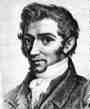
QUOTE: "The
more progress physical sciences make, the more they tend to enter the domain of
mathematics, which is a kind of center to which they all converge. We may even
judge the degree of perfection to which a science has arrived by the facility
with which it may be submitted to calculation."
Adolphe Quetelet
Quoted in E Mailly, Eulogy on Quetelet 1874
Adolphe Quetelet received his first doctorate in 1819 from Ghent for a dissertation on the theory of conic sections. After receiving this doctorate he taught mathematics in Brussels, then, in 1823, he went to Paris to study astronomy at the Observatory there. He learnt astronomy from Arago and Bouvard and the theory of probability under Joseph Fourier and Pierre Laplace. Influenced by Laplace and Fourier, Quetelet was the first to use the normal curve other than as an error law. His studies of the numerical consistency of crimes stimulated wide discussion of free will versus social determinism. For his government he collected and analysed statistics on crime, mortality etc. and devised improvements in census taking. His work produced great controversy among social scientists of the 19th century.
At an observatory in Brussels that he established in 1833 at the request of the Belgian government, he worked on statistical, geophysical, and meteorological data, studied meteor showers and established methods for the comparison and evaluation of the data.
Article by: J J O'Connor and E F Robertson
StatisticsFrom Wikipedia, the free
encyclopedia.
Find out how you can help support
Wikipedia's phenomenal growth.
Statistics is a branch of applied mathematics which includes the planning, summarizing, and interpreting of uncertain observations. Because the aim of statistics is to produce the "best" information from available data, some authors make statistics a branch of decision theory. As a model of randomness or ignorance, probability theory plays a critical role in the development of statistical theory.
The word statistics comes from the modern Latin phrase statisticum collegium (lecture about state affairs), from which came the Italian word statista, which means "statesman" or "politician" (compare to status) and the German Statistik, originally designating the analysis of data about the state. It acquired the meaning of the collection and classification of data generally in the early nineteenth century.
We describe our knowledge (and ignorance) mathematically and attempt to learn more from whatever we can observe. This requires us to
plan our observations to control their variability (experiment design),
summarize a collection of observations to feature their commonality by suppressing details (descriptive statistics), and
reach consensus about what the observations tell us about the world we observe (statistical inference).
In some forms of descriptive statistics, notably data mining, the second and third of these steps become so prominent that the first step (planning) appears to become less important. In these disciplines, data often are collected outside the control of the person doing the analysis, and the result of the analysis may be more an operational model than a consensus report about the world.
The probability of an event is often defined as a number between one and zero rather than a percentage. In reality however there is virtually nothing that has a probability of 1 or 0. You could say that the sun will certainly rise in the morning, but what if an extremely unlikely event destroys the sun? What if there is a nuclear war and the sky is covered in ash and smoke?
We often round the probability of such things up or down because they are so likely or unlikely to occur, that it's easier to recognise them as a probability of one or zero.
However, this can often lead to misunderstandings and dangerous behaviour, because people are unable to distinguish between, e.g., a probability of 10-4 and a probability of 10-9, despite the very practical difference between them. If you expect to cross the road about 105 or 106 times in your life, then reducing your risk per road crossing to 10-9 will make you safe for your whole life, while a risk per road crossing of 10-4 will make it very likely that you will have an accident, despite the intuitive feeling that 0.01% is a very small risk.
Some sciences use applied statistics so extensively that they have specialized terminology. These disciplines include:
Social statistics (for all the social sciences)
Process analysis and Chemometrics (for analysis of data from analytical chemistry and chemical engineering)
Statistics form a key basis tool in business and manufacturing as well. It is used to understand measurement systems variability, control processes (as in "statistical process control" or SPC), for summarizing data, and to make data-driven decisions. In these roles it is a key tool, and perhaps the only reliable tool.
Links to observable statistical phenomena are collected at statistical phenomena
Regression--analysis of variance (ANOVA) -- multivariate statistics -- extreme value theory -- list of statisticians -- list of statistical topics -- machine learning
How do you solve a percentage increase question?
- How do you calculate a percentage increase? For example if your supply of apples increases from 206 to 814, what was the percentage increase?
We can see by subtracting 206 from 814 that the increase in the number of apples is 608. Remember we started with 206, not zero.
Percentages are fractions. Dividing 814 by 206 gives approximately 3.951 and since we started with one whole (100%) basket of 206 apples we must subtract one from this percentage number. This is the step many people miss. So, 3.951 minus 1 equals 2.951. Multiplying this number by 100 to give percentage; 100 times 2.951 gives 295% increase as the answer.
- Check your work. Does this answer look correct? Well, if we had 200 apples increasing to 400 (double) that would be a 100% increase. So, increasing from 400 to 600 (another 200 apples) would be another 100% increase. So, increasing from 600 to 800 (another 200 apples) would be another 100% increase. So going from 200 to 800 represents an increase of 300%. 3 times our original amount of 200 equals 600 which is equal to the increase (800 minus 200 = 600). So the answer to our problem should be close to 300%. Our answer is 295% so it is close to what we would expect. Now let's do an accurate check of our original problem. 206 times 2.95 equals 608 (the number of apples increased) which proves our answer is correct.
Math Dictionary: http://www.blarg.net/~math/deflist.html
Definitions: http://userzweb.lightspeed.net/~barr/def.html
Math Words: http://www.geocities.com/poetsoutback/etyindex.html
Math Words for Middle Grades: http://mathcentral.uregina.ca/RR/glossary/middle/
A
VISUAL DICTIONARY OF SPECIAL PLANE CURVES - X. Lee For more information
see Xah Lee's Home Page
A
VISUAL DICTIONARY OF SPECIAL PLANE CURVES - X. Lee Xah Lee's Home Page
Some Examples from over 60 tutorials include
!!!!!MATH VIDEO TRAINING AVAILABLE !!!!!
MORE WEB MATH LINKS
Find other great math sites - Click here - on the web.
Common Errors Made in Math: http://math.vanderbilt.edu/~schectex/commerrs/
Math Terms/Dictionary: http://www.blarg.net/~math/deflist.html
Lesson Plans: http://www.awesomelibrary.org/Library/Materials_Search/Lesson_Plans/Math.html
Understanding Math Sequences and their Graphs http://jwilson.coe.uga.edu/emt669/Student.Folders/Jeon.Kyungsoon/document3/essay3.html
Dr. Math
Quasicrystals
Encyclopedia
Online
Note scroll down for the encyclopedia online.
Comprehensive Math
Tables
History of Mathematics
How to study Math &
Science
Chronological
List of Mathematicians
UNITS CONVERSION
CALCULATOR
Frank
Potter's Science (math) Gem's - Hugh collection
Ask
Dr. Math (K-12 Math questions answered)
MathNERDS
(Ask questions from K-5 through graduate college level.)
MegaMathematics ( Los Alamos National Laboratories)
The History of Mathematics (Great Site for Historical Information)
Find out how you can help support Wikipedia's phenomenal growth.
Mathematics is commonly defined as the study of patterns of structure, change, and space. In the modern formalist view, it is the investigation of axiomatically defined abstract structures using logic and mathematical notation. Mathematics is often abbreviated to math in North America and maths in other English-speaking countries.
These specific structures investigated often have their origin in the natural sciences, most commonly in physics, but mathematicians also define and investigate structures for reasons purely internal to mathematics, because the structures may provide, for instance, a unifying generalization for several subfields, or a helpful tool for common calculations. Finally, many mathematicians study the areas they do for purely aesthetic reasons, viewing mathematics as an art form rather than as a practical or applied science.
|
Table of contents [showhide] |
See the article on the history of mathematics for details.
The word "mathematics" comes from the Greek μάθημα (máthema) which means "science, knowledge, or learning"; μαθηματικός (mathematikós) means "fond of learning".
The major disciplines within mathematics arose out of the need to do calculations in commerce, to measure land and to predict astronomical events. These three needs can be roughly related to the broad subdivision of mathematics into the study of structure, space and change.
The study of structure starts with numbers, firstly the familiar natural numbers and integers and their arithmetical operations, which are recorded in elementary algebra. The deeper properties of whole numbers are studied in number theory. The investigation of methods to solve equations leads to the field of abstract algebra, which, among other things, studies rings and fields, structures that generalize the properties possessed by the familiar numbers. The physically important concept of vector, generalized to vector spaces and studied in linear algebra, belongs to the two branches of structure and space.
The study of space originates with geometry, first the Euclidean geometry and trigonometry of familiar three-dimensional space, but later also generalized to non-Euclidean geometries which play a central role in general relativity. Several long standing questions about ruler and compass constructions were finally settled by Galois theory. The modern fields of differential geometry and algebraic geometry generalize geometry in different directions: differential geometry emphasizes the concepts of coordinate system, smoothness and direction, while in algebraic geometry geometrical objects are described as solution sets of polynomial equations. Group theory investigates the concept of symmetry abstractly and provides a link between the studies of space and structure. Topology connects the study of space and the study of change by focusing on the concept of continuity.
Understanding and describing change in measurable quantities is the common theme of the natural sciences, and calculus was developed as a most useful tool for doing just that. The central concept used to describe a changing variable is that of a function. Many problems lead quite naturally to relations between a quantity and its rate of change, and the methods to solve these are studied in the field of differential equations. The numbers used to represent continuous quantities are the real numbers, and the detailed study of their properties and the properties of real-valued functions is known as real analysis. For several reasons, it is convenient to generalise to the complex numbers which are studied in complex analysis. Functional analysis focuses attention on (typically infinite-dimensional) spaces of functions, laying the groundwork for quantum mechanics among many other things. Many phenomena in nature can be described by dynamical systems and chaos theory deals with the fact that many of these systems exhibit unpredictable yet deterministic behavior.
In order to clarify and investigate the foundations of mathematics, the fields of set theory, mathematical logic and model theory were developed.
When computers were first conceived, several essential theoretical concepts were shaped by mathematicians, leading to the fields of computability theory, computational complexity theory, information theory and algorithmic information theory. Many of these questions are now investigated in theoretical computer science. Discrete mathematics is the common name for those fields of mathematics useful in computer science.
An important field in applied mathematics is statistics, which uses probability theory as a tool and allows the description, analysis and prediction of phenomena and is used in all sciences. Numerical analysis investigates the methods of efficiently solving various mathematical problems numerically on computers and takes rounding errors into account.
Mathematics may be defined as the subject in which we never know what we are talking about, nor whether what we are saying is true.
An alphabetical list of mathematical topics is available; together with the "Watch links" feature, this list is useful to track changes in mathematics articles. The following list of subfields and topics reflects one organizational view of mathematics.
Numbers -- Natural numbers -- Integers -- Rational numbers -- Real numbers -- Complex numbers -- Hypercomplex numbers -- Quaternions -- Octonions -- Sedenions -- Hyperreal numbers -- Surreal numbers -- Ordinal numbers -- Cardinal numbers -- p-adic numbers -- Integer sequences -- Mathematical constants -- Number names -- Infinity
Arithmetic -- Calculus -- Vector calculus -- Analysis -- Differential equations -- Dynamical systems and chaos theory -- Fractional calculus -- List of functions
Abstract algebra -- Number theory -- Algebraic geometry -- Group theory -- Monoids -- Analysis -- Topology -- Linear algebra -- Graph theory -- Universal algebra -- Category theory
Topology -- Geometry -- Trigonometry -- Algebraic geometry -- Differential geometry -- Differential topology -- Algebraic topology -- Linear algebra -- Fractal geometry
Combinatorics -- Naive set theory -- Probability -- Theory of computation -- Finite mathematics -- Cryptography -- Graph theory -- Game theory
Mechanics -- Numerical analysis -- Optimization -- Probability -- Statistics
Fermat's last theorem -- Riemann hypothesis -- Continuum hypothesis -- P=NP -- Goldbach's conjecture -- Twin Prime Conjecture -- Gödel's incompleteness theorems -- Poincaré conjecture -- Cantor's diagonal argument -- Pythagorean theorem -- Central limit theorem -- Fundamental theorem of calculus -- Fundamental theorem of algebra -- Fundamental theorem of arithmetic -- Four color theorem -- Zorn's lemma -- "The most remarkable formula in the world"
Philosophy of mathematics -- Mathematical intuitionism -- Mathematical constructivism -- Foundations of mathematics -- Set theory -- Symbolic logic -- Model theory -- Category theory -- Theorem-proving -- Logic -- Reverse Mathematics -- Table of mathematical symbols
History of mathematics -- Timeline of mathematics -- Mathematicians -- Fields medal -- Abel Prize -- Millennium Prize Problems (Clay Math Prize) -- International Mathematical Union -- Mathematics competitions -- Lateral thought
Old:
New:
Computer algebra systems:
Davis, Philip J.; Hersh, Reuben: The Mathematical Experience. Birkhäuser, Boston, Mass., 1980. A gentle introduction to the world of mathematics.
Gullberg, Jan: Mathematics--From the Birth of Numbers. W.W. Norton, 1996. An encyclopedic overview of mathematics presented in clear, simple language.
Mathematical Society of Japan: Encyclopedic Dictionary of Mathematics, 2nd ed.. MIT Press, Cambridge, Mass., 1993. Definitions, theorems and references.
Michiel Hazewinkel (ed.): Encyclopaedia of Mathematics. Kluwer Academic Publishers 2000. A translated and expanded version of a Soviet math encyclopedia, in ten (expensive) volumes, the most complete and authoritative work available. Also in paperback and on CD-ROM.
A mathematical thesaurus maintained by the University of Cambridge (UK), http://thesaurus.maths.org/
Rusin, Dave: The Mathematical Atlas, http://www.math-atlas.org/. A tour through the various branches of modern mathematics.
Weisstein, Eric: World of Mathematics, http://www.mathworld.com/. An online encyclopedia of mathematics.
Planet Math, http://planetmath.org/. An online math encyclopedia under construction. Uses the GFDL license, allowing article exchange with Wikipedia. Uses TeX markup.
MathForge, http://www.mathforge.net/. A news-blog with topics ranging from popular mathematics to popular physics to computer science and education.
Mathematics BOOK List (Large). Click >> HERE!!
Schaum's
Mathematical Handbook of Formulas and Tables
by Murray R. Spiegel, John M. Liu
Read what one reader thought of this book......
You are crazy if you don't have this book!, July 11, 2000
A reviewer from Los Angeles said:
Great reference for formulas and identities that you have forgotten. Integral
table is awsome. ......This is some of the best money I have ever spent. Used it all the time in
my physics classes and ALWAYS carry it with me. How did I ever get on without
it?
LEARN FROM VIDEOS!
|
|
Return to www.101science.com home page. To top of this page.